Ancient War
historyThe Fall of the Dragons
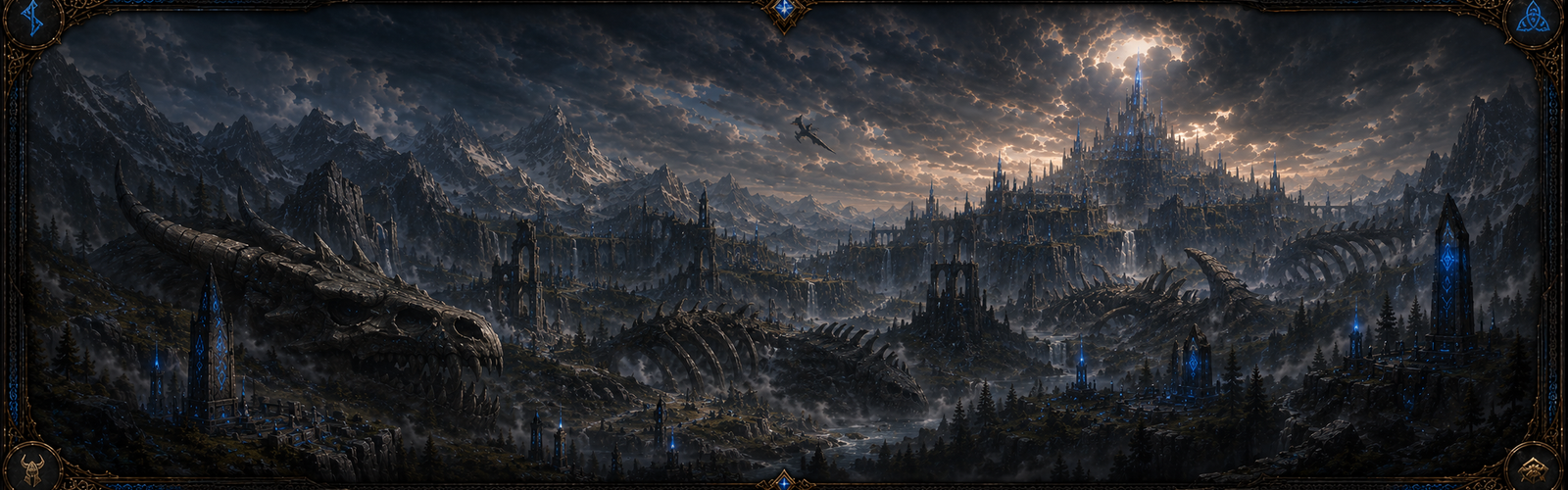
There was a time when the sky had voices, and Dragonheim still lives in the shadow of their silence.
Open chronicle →
A dangerous realm of kingdoms, relics, guilds, and histories written in dragonbone.
Explore persistent timeline records tied to kingdoms, duchies, counties, and political change across the Dragonheim world archive.
There was a time when the sky had voices, and Dragonheim still lives in the shadow of their silence.
Open chronicle →Valebrook, Duskmarrow, and Aurelfen did not emerge cleanly; each crown is a compromise built on old war claims.
Open chronicle →The heartland district exists because no crown could afford to let the others own the central transit nexus outright.
Open chronicle →Modern trade in dragon remains reshapes law, smuggling, and noble legitimacy across the realm.
Open chronicle →World history covers civilizational eras and political memory. Shard chronicles track the live stories players create inside each realm.
The first public coronation ceremony on the launch shard became the template for how realm legitimacy is recorded across community and lore surfaces.
Open shard chronicle →A succession dispute around relic custody forced moderators, lore archivists, and guild diplomats to treat shard politics as durable public history.
Open shard chronicle →Aurelfen-1 logged the first guild charter recognized jointly by county officers, river toll houses, and forum witnesses.
Open shard chronicle →